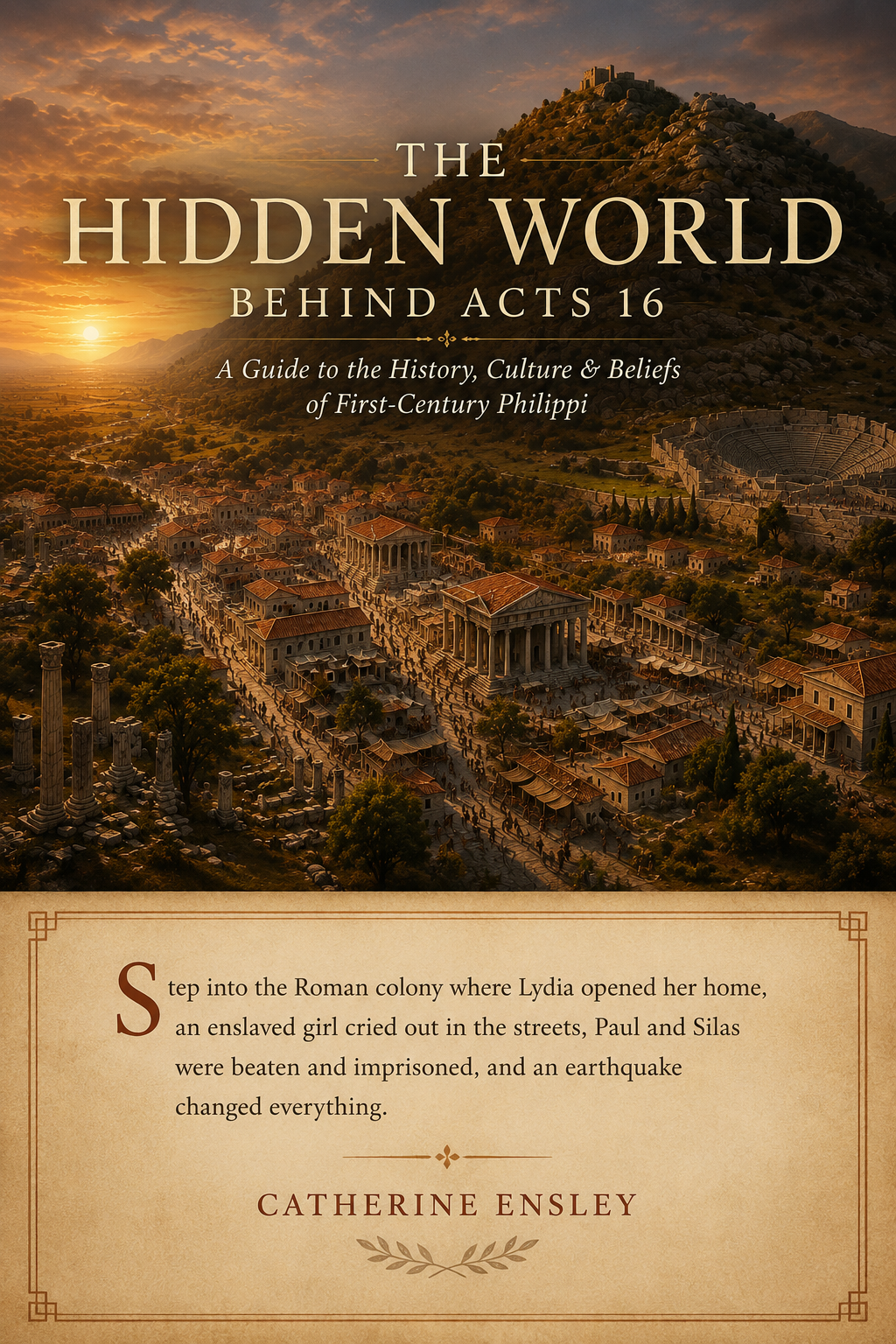
Step Into the Hidden World Behind Acts 16
A free illustrated guide to the history, culture, and beliefs behind one of the most dramatic chapters in the New Testament.
Acts 16 tells a remarkable story: a wealthy merchant named Lydia, an enslaved girl with a “spirit of Python,” Roman magistrates and lictors, a brutal public beating, a midnight earthquake, and a terrified jailer asking what he must do to be saved.
But behind those familiar verses lies a world most modern readers never see.
Inside the Guide
Explore the people, places, beliefs, and institutions that shaped the events of Acts 16.
Why Philippi thought of itself as “Little Rome.”
What everyday life was like in a first-century Roman colony
What Luke may have meant by a “spirit of Python”
Why an enslaved girl's gift of divination could make her owners wealthy
What Paul and Silas faced when they were dragged before the magistrates
What we know about Roman prisons, punishment, and the Philippian jailer
How the history and culture of Philippi can deepen the way you read Acts 16
The story hasn’t changed. But once you see the world behind it, you may never read it quite the same way again.
The World Behind
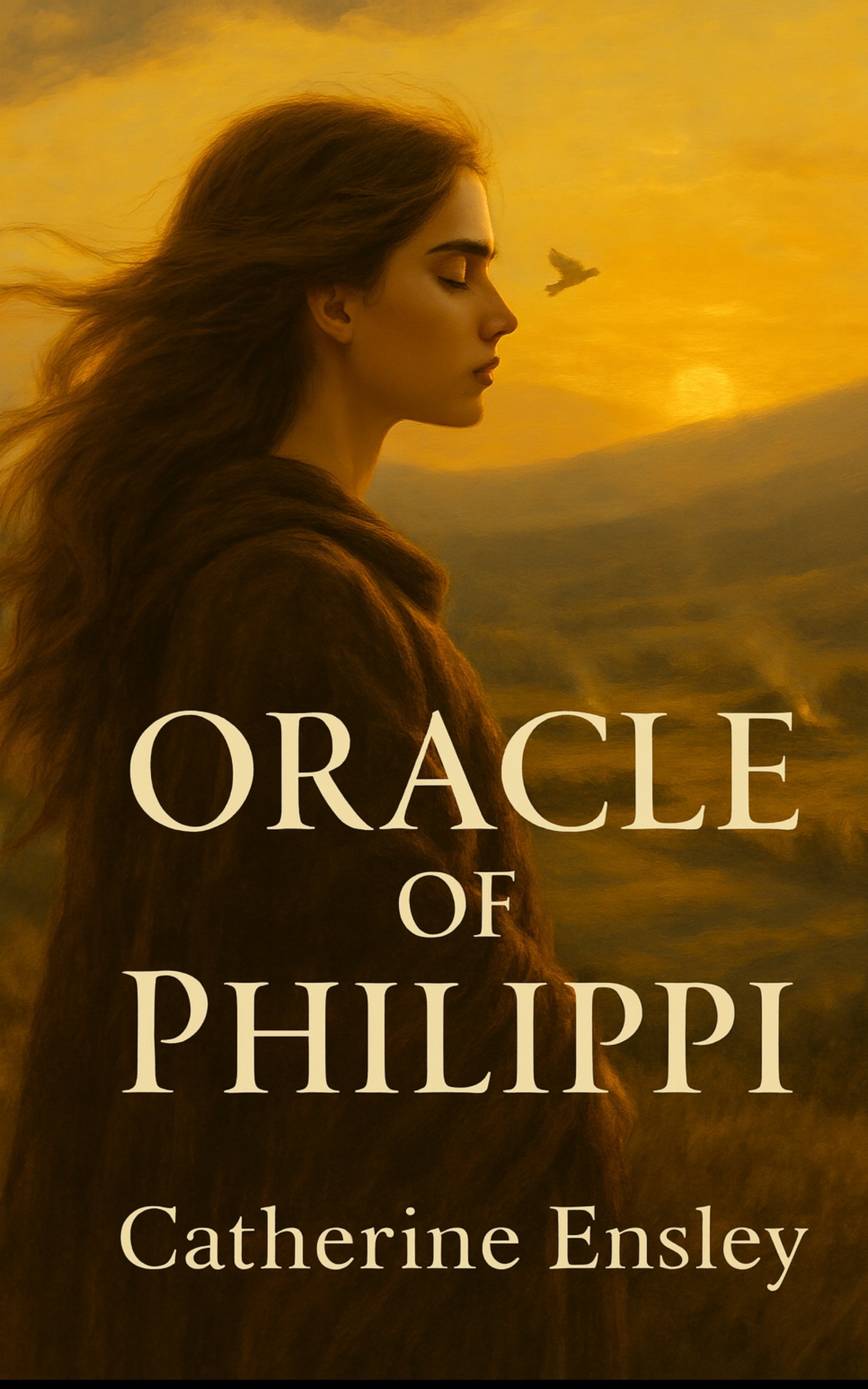
Oracle of Philippi
I first entered this world while researching my biblical historical novel Oracle of Philippi, a retelling of Acts 16 centered on the unnamed enslaved girl who followed Paul and his companions through the streets of Philippi.
The novel imagines her story; this guide explores the real historical world behind it—the Roman colony, its people and customs, its religious beliefs, and the events Luke describes in Acts.
Get the Free Guide
Join Chains & Crowns, my monthly newsletter exploring the people, places, history, and beliefs of the ancient world—and the stories they inspire.
You’ll receive the guide by email, along with future issues of Chains & Crowns. Unsubscribe anytime.